The Complete Prefab Materials Buying Guide for Nepal (2026)
Building a home or commercial space in Nepal today means choosing from more materials than ever — and the right choice at each stage can meaningfully affect your budget, timeline, and how the building performs for the next 25 years. Here's a practical walkthrough of how to shop smart, category by category.
Start With the Structure
Before anything else, decide between prefab steel-frame, PEB, or traditional RCC construction. Steel-frame and PEB systems go up faster and pair naturally with insulated sandwich panels; RCC remains the default for multi-storey buildings and sites where long-term load flexibility matters more than speed.
Insulation: Don't Treat It as an Afterthought
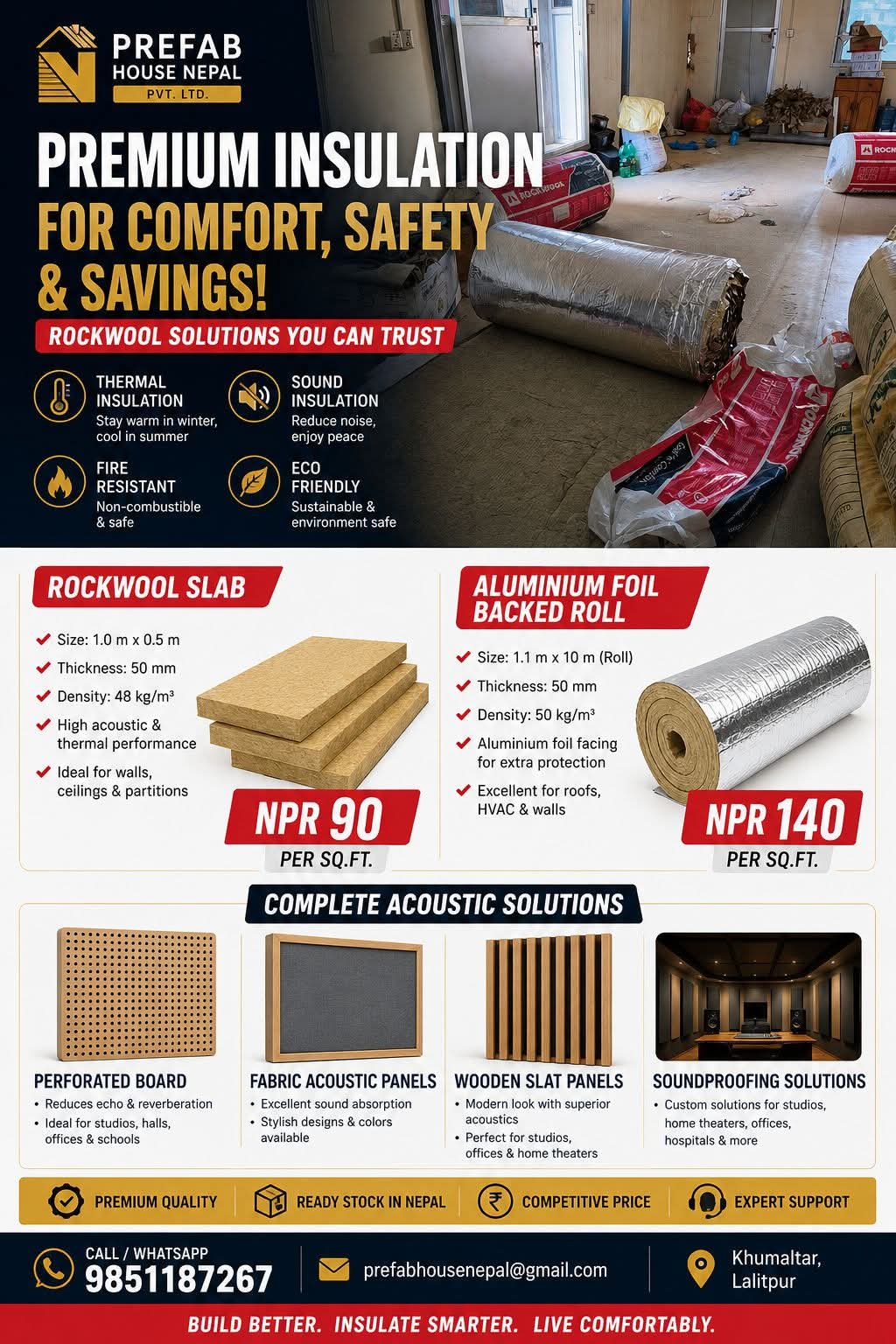
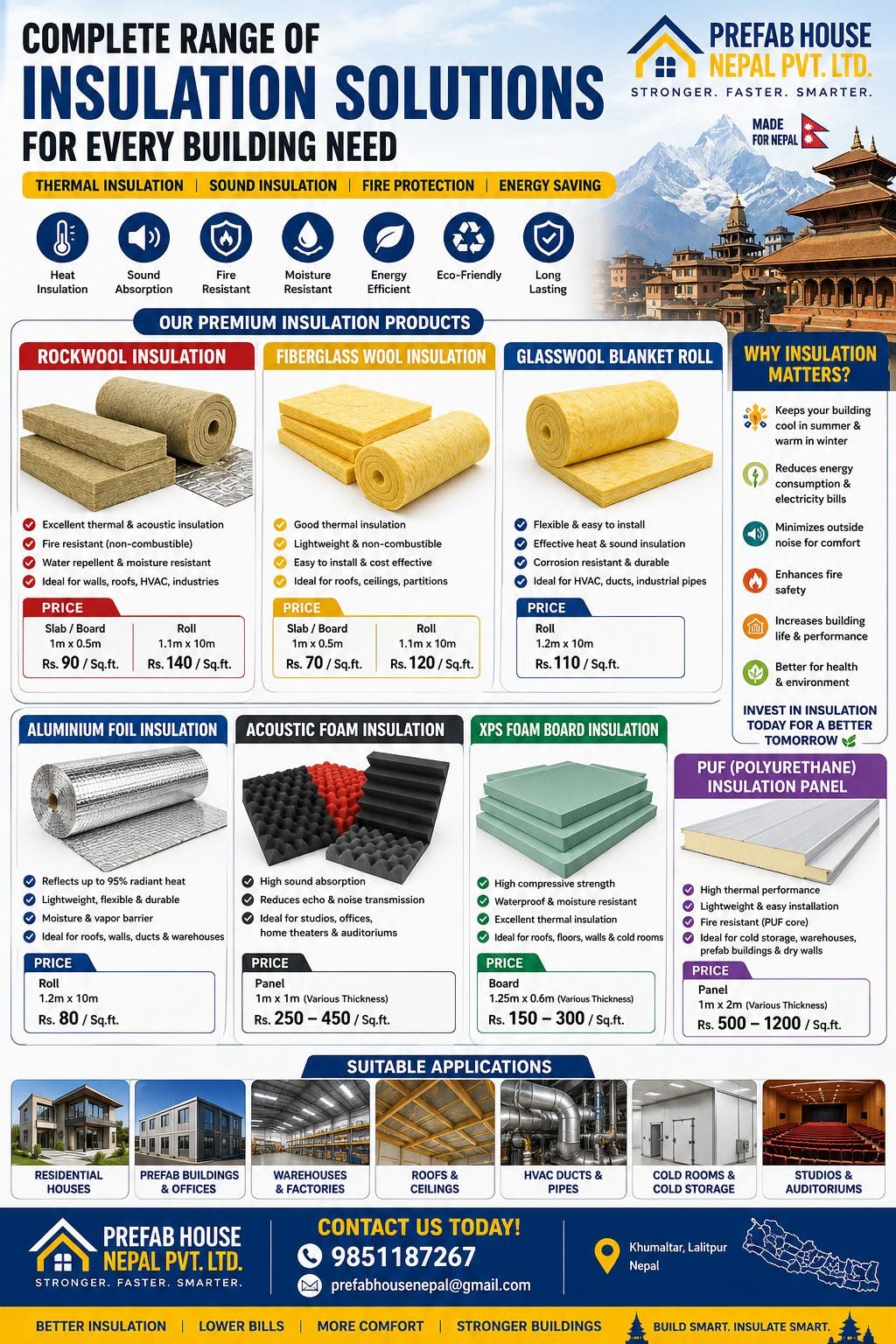
Rockwool, GlassWool, XPS, EPS and aluminium foil insulation all solve slightly different problems — thermal comfort, fire resistance, or sound control. Specifying insulation at the design stage (built into wall panels) is far cheaper than retrofitting it after walls are closed up.
Roofing: Match the Material to the Building Type
CGI sheets remain the most economical roofing choice for standard homes, while Decra tiles, PUF panels and interlocking concrete tiles suit projects where appearance or extra insulation value matters more than upfront cost.
Flooring: Budget vs. Durability
Ceramic and vitrified tiles cover most residential needs affordably; epoxy coatings and rubber flooring are worth the extra cost for garages, warehouses, and gyms where the floor takes heavy daily wear. Marble and wooden laminate sit at the premium end for living spaces where appearance is the priority.
Don't Forget the Systems Behind the Walls
Plumbing (PVC/CPVC pipes, water tanks, solar water heaters) and electrical work (wiring, distribution boards, LED lighting, smart switches) are easy to underestimate when budgeting, but they're the systems you'll interact with daily — it's worth specifying quality components here even if it means trimming elsewhere.
Finishing Touches That Add Real Value
Aluminium composite panels and curtain-wall glazing transform a building's street presence; handrails, staircase railings and false-ceiling moldings do the same for interiors. These are also the easiest items to defer to a later phase if the budget is tight in the first round of construction.
A Simple Rule of Thumb
If you only remember one thing: spend on what's hard to change later (structure, insulation, plumbing rough-in, electrical rough-in) and stay flexible on what's easy to upgrade later (paint, light fixtures, floor finishes, landscaping).
Prefab House Nepal's Shop carries all of the categories mentioned here — Insulation, Roofing, Flooring, Plumbing, Electrical & Lighting, Paint & Finishes, Hardware, Landscaping and more — with a free consultation available if you'd like help sequencing your purchases against your build schedule.