Continuous Sandwich Panels in Nepal: Types, Benefits & Cost Guide (2026)
Sandwich panels are the backbone of modern prefab construction — two metal skins bonded to an insulating core, delivering structure and insulation in a single lightweight component. If you're planning a prefab home, warehouse, or cold room in Nepal, here's what you need to know before choosing a panel type.
What Is a Sandwich Panel?
A sandwich panel is exactly what it sounds like: an insulating core "sandwiched" between two layers of pre-painted or galvanized steel. The core material determines the panel's fire rating, insulation value, and price — the three factors that matter most for a Nepali build.
The Three Core Types
PUF (Polyurethane Foam) Panels — The best thermal performance per millimeter of thickness, making them popular for cold storage, warehouses, and premium prefab homes. Lightweight and quick to install, though slightly more expensive than EPS.
EPS (Expanded Polystyrene) Panels — The most budget-friendly option, widely used for general-purpose walls and roofs where extreme cold-storage-grade insulation isn't required. Good value for standard homes, offices, and schools.
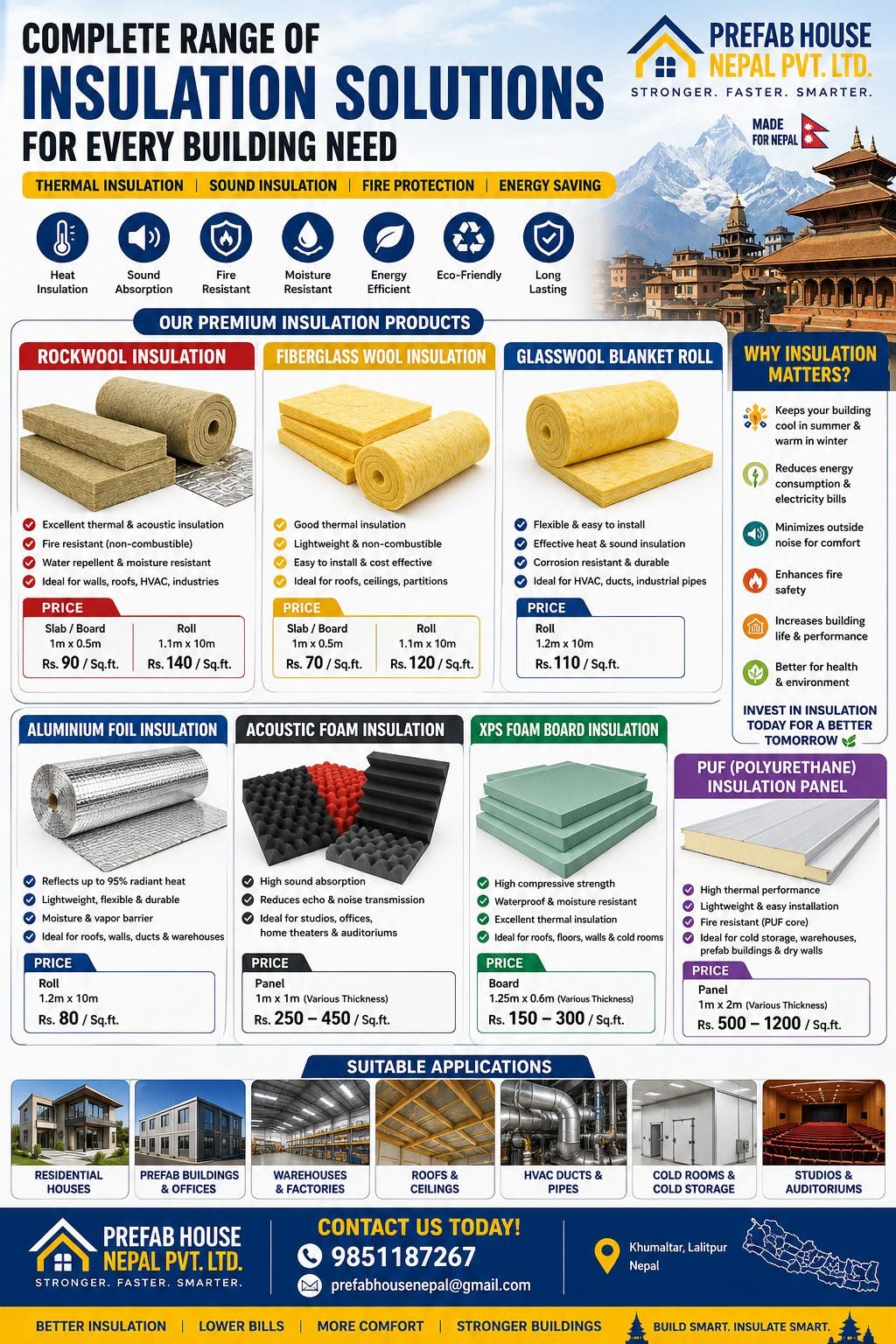
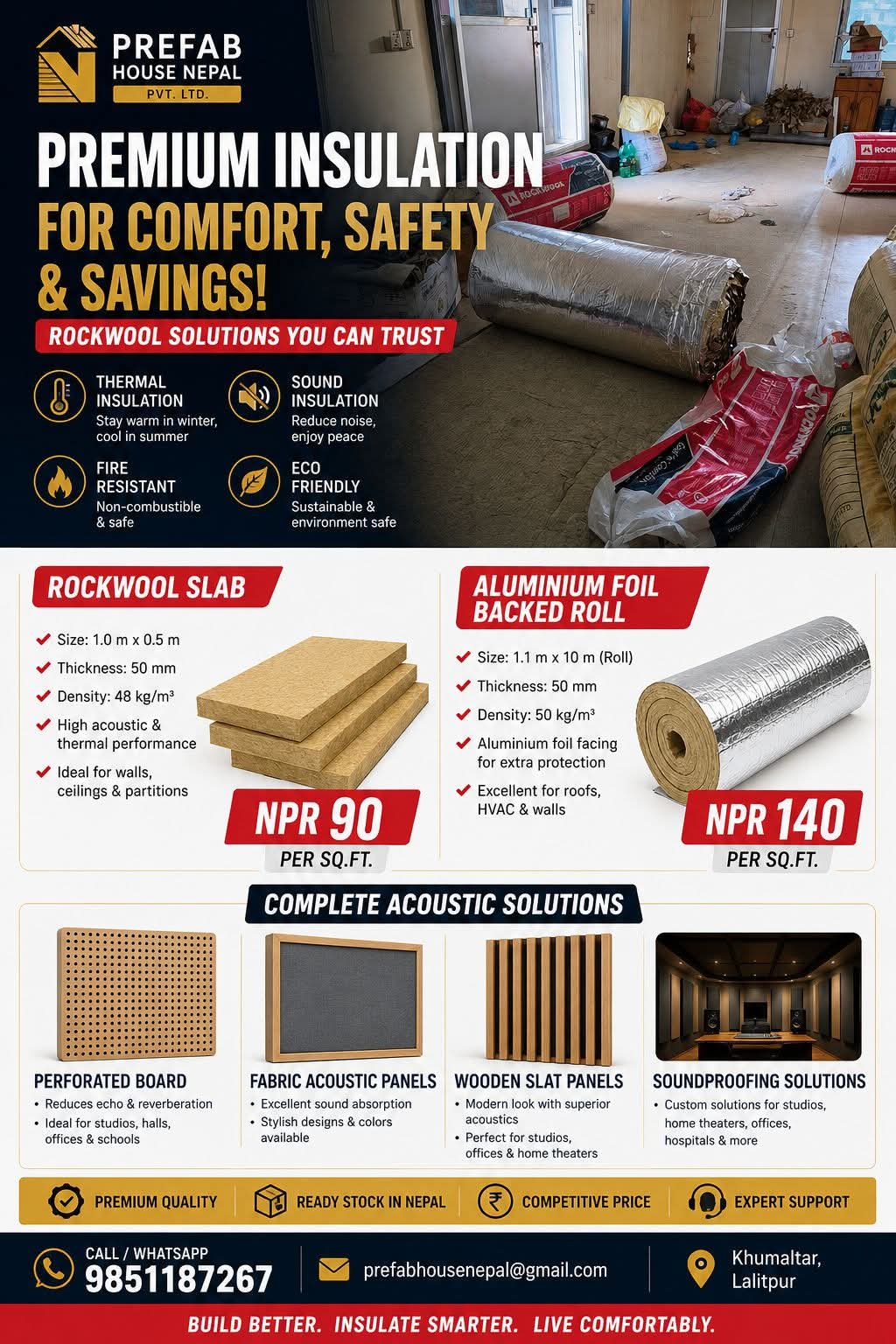
Rockwool Panels — The choice when fire resistance and soundproofing matter as much as thermal insulation — commonly specified for industrial buildings, acoustic studios, and any structure with strict fire-safety requirements.
Choosing the Right Panel for Your Project
- Homes and offices: EPS panels typically offer the best balance of cost and comfort for Kathmandu Valley's climate.
- Cold storage and food warehousing: PUF panels are worth the extra cost for their superior insulation value.
- Schools, hospitals, and studios: Rockwool panels add fire resistance and sound control on top of thermal performance.
What Affects Panel Pricing in Nepal
Panel cost depends on core type, thickness (50mm to 150mm is standard), steel gauge, and coating finish. As a general guide, EPS panels sit at the lower end of the price range, PUF panels in the middle, and Rockwool panels at the higher end — reflecting their added fire and acoustic performance. For current per-square-foot pricing, see our Shop page or request a free quotation.
Installation Considerations
Sandwich panels are fastened directly to a steel or timber frame using self-drilling screws with weatherproof washers, and joints are sealed to prevent thermal bridging. A typical prefab room can be fully panelled in a single day once the frame is up — one of the biggest time savings prefab construction offers over traditional brick-and-block building.
Ready to specify panels for your next project? Contact Prefab House Nepal for a free consultation and site-specific recommendation.